
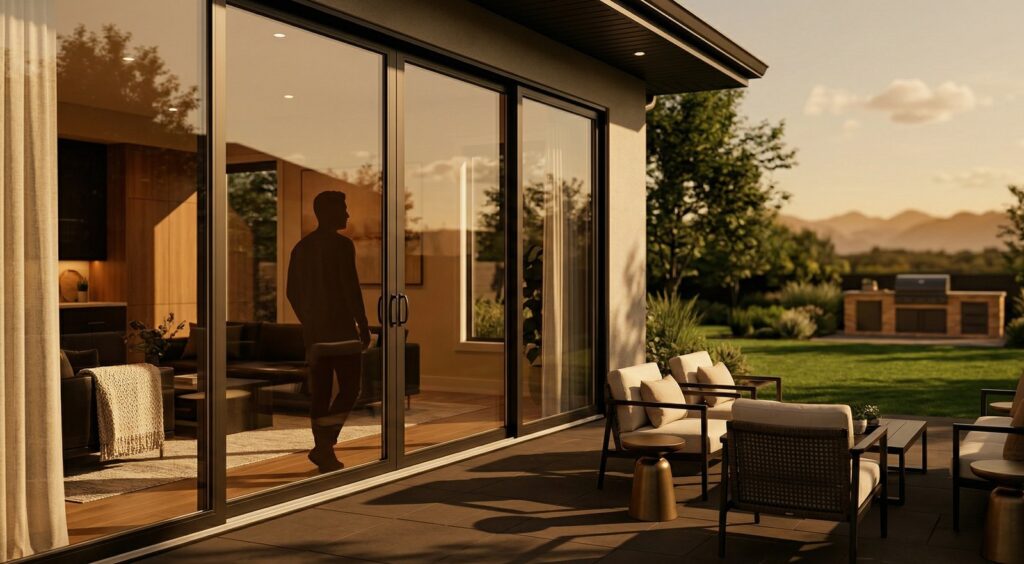
West-facing Calgary windows can feel like a different climate from the rest of the house. During chinook conditions, the afternoon light can be low, bright, warm, and direct enough to make a room unusable. Screens wash out, floors heat up, pets move away from the glass, and homeowners end up closing blinds even though they bought the house for the view.
Solar window film is not a replacement for every blind or shade, but it is one of the cleanest ways to reduce heat, glare, UV exposure, and fading while keeping the window usable. That is especially useful in Calgary neighborhoods with larger west glass, walkout lots, mountain views, and open exposures.
Why West Glass Is Different
South-facing glass gets more total year-round sun, but west-facing glass often feels worse in summer and shoulder seasons. The sun arrives later in the day when the home is already warm. It hits at a lower angle, so the light travels deeper into the room. During a chinook, the air temperature can rise quickly while the sun angle creates harsh screen glare and hot surfaces.
The result is a room that does not behave like the thermostat says it should. The rest of the house may be comfortable while the west bedroom, living room, stairwell, or office becomes the problem zone. Closing blinds solves the immediate glare but gives up daylight and view. Film reduces the load at the glass before the light becomes a room problem.
What Solar Film Can Change
Solar window film can reduce several issues at once. It can cut glare so screens are easier to use. It can reduce incoming solar heat so the room is less likely to spike in the afternoon. It can block most UV exposure, which helps slow fading on floors, rugs, art, millwork, and upholstery. It can also make the room feel more consistent without the daily routine of adjusting blinds.
The exact result depends on film selection. A clearer ceramic-style film may preserve the view and exterior appearance while reducing heat and UV. A more reflective or lower-light film may deliver stronger glare reduction but change the look of the glass more noticeably. The right answer depends on the room, the exposure, and how much visible change the homeowner accepts.
Where Calgary Homes Notice It Most
West-facing film projects show up in predictable places. Bonus rooms over garages often get hot. Primary bedrooms can become uncomfortable before bedtime. Stairwell glass can create a bright vertical heat source. Patio doors and large living room panes can fade flooring and furniture. Home offices can become hard to use when the sun lands directly on screens.
Luxury west-side homes can have large glass packages facing open sky, ravines, or mountain views. In those cases, the decision is rarely about making the room dark. It is about keeping the glass enjoyable. For large west-side glass, Aspen Woods solar window film is a better starting point for comfort planning without ruining the view.
Choosing The Film Level
The film level should be chosen by the problem. If glare on screens is the main issue, visible light and glare reduction matter. If the room feels hot, total solar energy rejection and infrared rejection matter. If the homeowner is worried about floors and furniture, UV rejection matters. If the exterior look is sensitive, reflectivity matters.
Do not choose only by the darkest sample. Calgary homes often need a balanced film, not the most aggressive one. A film that is too dark can make winter daylight feel worse. A film that is too reflective may not fit the exterior look of the home or the expectations of a condo board. A product that is not appropriate for the glass can create compatibility concerns. The best choice is specific, not generic.
What A Quote Should Include
A proper quote should separate film area, film type, access, and glass conditions. It should identify any high glass, old film, damaged seals, large panes, or difficult access. It should also explain the look of the film from inside and outside. If the goal is to preserve a view, ask to see a sample on the actual glass before deciding.
Photos are the fastest way to start. Send the room, the window sizes, the exposure, and a short note about when the problem happens. A good note might say: west bedroom, 3 PM to 7 PM, screen glare and heat, want to keep view, no dark tint. That information is more useful than asking for a generic price per window.
Solar Film vs Blinds
Blinds are useful, but they solve the problem after sunlight has entered the window opening. They can stop glare from reaching your eyes, but heat can still build between the glass and the shade. They also block the view, which is often the reason the window was important in the first place. Solar film works at the glass, reducing part of the load before the room has to deal with it.
Many Calgary homes still use both. Film handles the daily heat, UV, and glare baseline. Blinds handle full privacy, nighttime control, sleeping, or the few hours when the sun angle is extreme. That combination can be more comfortable than asking one product to do everything.
Rooms To Prioritize First
If the budget does not allow every west-facing pane to be treated at once, start with the room that changes behavior the most. A home office where calls are interrupted by glare may matter more than a rarely used dining room. A child’s bedroom that overheats before bedtime may matter more than a stairwell. A living room with fading hardwood may matter more than a garage window.
Prioritizing by consequence keeps the project practical. It also gives the homeowner a chance to live with the film before expanding the scope. If the first room solves the comfort problem and the appearance feels right, the next phase is easier to choose.
Budgeting The Project
Cost depends on the square footage of glass, pane count, film family, access, and whether any prep or removal is needed. A few west windows may be a small targeted project. A whole-home west elevation may need a more careful plan. The Calgary window film cost guide gives planning ranges by film type and a calculator for rough estimates.
For a local proof point, see the SE Calgary residential window tinting case study. It shows how a targeted film scope can be installed efficiently when the problem is specific and the glass is ready.
What To Watch After Installation
After film is installed, judge it over several days, not only in the first hour. Check the room during the same late-afternoon window that caused the problem. Look at screen glare, floor heat, furniture exposure, and whether the blinds stay open longer than before. Some installation moisture can take time to cure, so the final appearance may settle after the first days or weeks depending on film and conditions.
That follow-up is useful if the project may expand to other rooms. It gives the homeowner a real reference point for how much visible change, heat reduction, and glare control they are comfortable with before ordering more film.
West-facing rooms do not have to be rooms you avoid in the afternoon. With the right film, they can keep more of the view, lose less comfort, and need fewer daily blind adjustments.
Plan solar film for west glass or send room photos.
Related Services
Solar Window Film Calgary
Residential and commercial solar window film in Calgary for heat, glare, UV exposure, fading control, and west-facing windows.
See Solar Window Film Calgary detailsSolar Window Film Aspen Woods Calgary
Solar window film for Aspen Woods homes with large west-facing glass, heat load, glare, UV exposure, and view-preserving film options.
See Solar Window Film Aspen Woods Calgary details2026 Window Film Cost Calgary — Price Guide by Type & Size
2026 Calgary window film cost guide — solar, privacy, decorative, and security film priced by type and size, from $8/sq ft. Send photos for a fast estimate.
See 2026 Window Film Cost Calgary — Price Guide by Type & Size details