
When NOAA’s Climate Prediction Center starts flagging a warm-trending ENSO outlook for the year ahead, Calgary’s installers feel it in the phones — homeowners start booking solar window film appointments weeks before patio season. This year the early-booking trend has arrived sooner than usual, and for good reason. An El Niño-leaning summer typically means hotter daytime highs, more sun-exposure hours on south- and west-facing glass, and a longer stretch of UV-intense afternoons than a neutral or La Niña year.
The homeowners ahead of the curve aren’t waiting to find out how hot it gets. They’re filming windows now, while our schedule is open and installs can be done in a single visit.
What Changes in a Warmer Calgary Summer
Calgary’s baseline summer is already intense on unprotected glass. South- and west-facing windows can transmit more than 700 watts of solar heat per square metre at peak, turning living rooms into greenhouses by 3 PM. In an El Niño-influenced year, that peak lasts longer — more cloud-free afternoons, fewer cooling fronts, and more consecutive days above 28 °C.
That translates directly into three problems inside the home:
- Hot spots — rooms with large west-facing glass that stay 4–6 °C warmer than the rest of the house, regardless of A/C cycling.
- UV-driven fading — hardwood, art, upholstery, and rugs lose colour faster in high-UV summers; clear glass only blocks about 25% of UV.
- HVAC over-run — air conditioners cycle longer, consuming more electricity and shortening equipment life.
Why Timing Matters for Window Film
Solar and heat-rejection window films are a one-time install, but they work best when they’re on the glass before the first heat wave, not during it. Three reasons:
- Installation windows shrink in summer. Once highs consistently exceed 25 °C, installer schedules in Calgary compress into early-morning and evening slots. Booking in April or early May means you pick the day, not the reverse.
- Film cures in cooler weather without haze. Most modern films need 7–30 days to fully cure (the micro-bubbles of installation moisture dissipate). A spring install is fully cured before peak July sun — a July install cures under peak stress, which is fine but slower.
- Energy savings start immediately. A 50% total-solar-energy-rejection (TSER) film installed in April pays back on every hot day for the rest of the summer. Installed in August, you’ve lost half the cost-recovery window.

What Kind of Film Calgary Homes Actually Need
Not all “window tint” is the same. For Calgary’s mix of bright sun, long summer daylight, and cold winters (where you want solar heat back), the film choice matters:
Spectrally Selective Ceramic Film
Our most-requested option for residential projects. Ceramic films use microscopic ceramic particles to reject infrared heat while staying visibly clear. Typical specs:
- Visible light transmission: 45–70% (no mirror effect, no dark look)
- Total solar energy rejection: 45–60%
- UV rejection: 99%+
- Infrared rejection: 85%+
This is the film you want if you like the view from your picture windows and don’t want the house looking tinted from the street.
Dual-Reflective Solar Film
Best for south- and west-facing commercial glass or large residential walls of glass. It’s slightly more visible from outside (mild reflective appearance in bright sun) but rejects 60–75% of total solar energy, which is the biggest heat-reduction number available in a see-through film.
Decorative + Privacy Films (Dual Purpose)
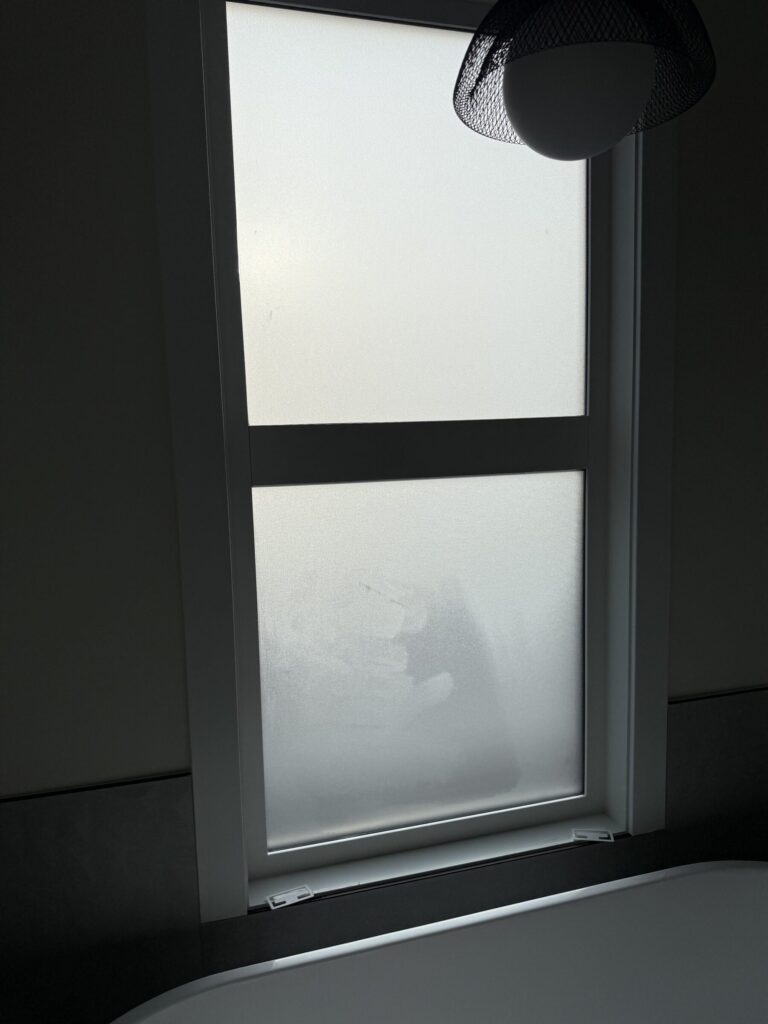
If you also need daytime privacy — main-floor bathrooms, side-street-facing bedrooms, ground-floor offices — a frosted or patterned privacy film can solve both problems in one install. These don’t hit the same heat-rejection numbers as solar ceramic, but for smaller openings the combined benefit is often the right call.
Calgary-Specific Considerations
- Triple-pane windows. Most Calgary new builds since 2015 have triple-pane Low-E glass. Some older film products aren’t rated for triple-pane and can cause thermal stress. We only specify triple-pane-rated films for these installs.
- Chinook cycles. Calgary glass sees 40+ °C swings in a week during chinook season. Film must tolerate that expansion/contraction without lifting — another reason we stay with top-tier manufacturers like 3M, Llumar, and SunTek.
- Winter heat gain. A good spectrally selective film still lets most visible light through, so you keep daytime brightness in January. It’s a solar reducer, not a light blocker.
What a Typical Residential Install Looks Like
For a standard Calgary two-storey with 8–12 larger south/west windows, we’re usually in and out in 4–6 hours, with one or two installers. Process: clean glass to lab spec, cut film to exact pane dimensions with a plotter, squeegee-apply with distilled solution, trim to edge, and quality-check every seam. You can return to normal use immediately; full cure happens over the next 7–14 days.
Booking Ahead of the Summer Rush
If NOAA’s ENSO outlook holds and Calgary sees another warm-trending summer, the homeowners booking window film now will be the ones with comfortable upstairs bedrooms by July. We offer free in-home consultations, bring sample films to match your existing glass, and quote the same day.
See our solar and heat-rejection films or request a free quote — we cover Calgary, Airdrie, Chestermere, Okotoks, Cochrane, and Red Deer.