
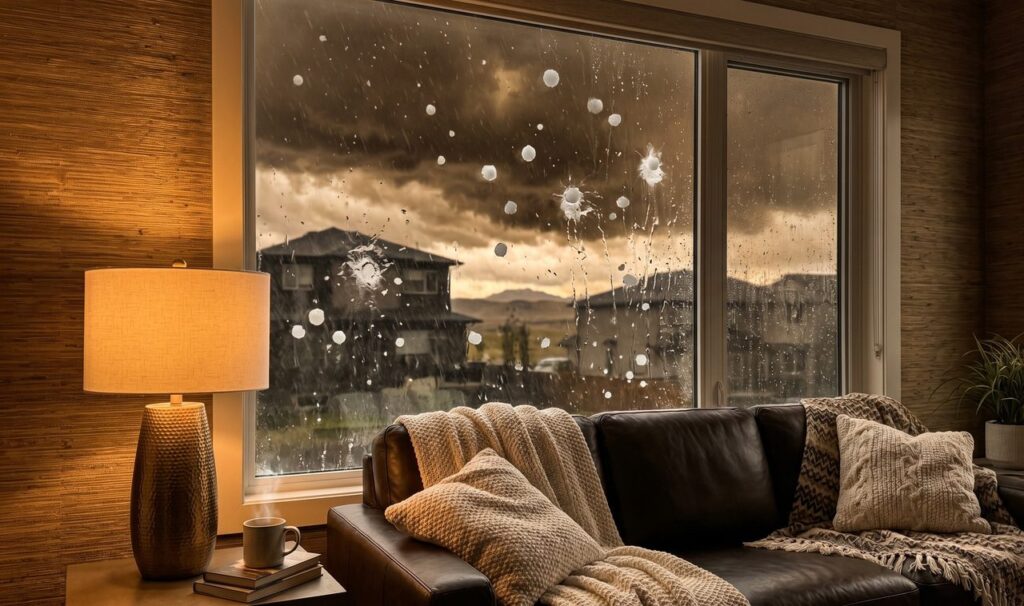
Calgary hail planning is not just an insurance conversation. For some homes and commercial spaces, it is also a glass containment conversation. Hail can break exposed glass, and broken glass can create cleanup, injury, water, security, and downtime problems. Security and impact-oriented film may help hold broken glass together after impact, but it needs to be scoped honestly. It does not make glass hail-proof.
The neighborhoods most likely to care about this are usually the ones with exposed elevations, large panes, walkout lots, open fields, northeast and southeast storm exposure, and glass that would be disruptive or expensive to replace. The decision is less about a map line and more about the specific glass, exposure, room use, and risk tolerance.
Where Film Can Make Sense
Impact-oriented film is worth reviewing when broken glass would create a bigger problem than the pane itself. Patio doors near kids or pets, basement walkout glass, ground-floor sidelights, storefront entries, vulnerable commercial glass, and rooms with expensive interiors may deserve a closer look. In commercial settings, after-hours breakage can also become a security and operations problem.
Hail-resistant window film is reviewed as a premium impact-resistance option, not a guarantee against breakage. The goal is to improve containment behavior and reduce uncontrolled glass fallout when the glass is damaged. The frame, attachment, film thickness, glass type, and installation details all affect the result.
Where Film Is Not The Whole Answer
Some hail problems are better solved with exterior protection, shutters, replacement glass, insurance planning, or changes to landscaping and exposure. Film sits on the glass. It cannot stop the force of a severe storm from reaching the pane, and it cannot make weak frames stronger. If the glass breaks, the film may help hold fragments together, but the pane still needs repair or replacement.
This is why wording matters. Any quote that promises hail-proof glass should raise concern. A responsible scope should talk about risk reduction, glass containment, realistic limits, and whether attachment should be reviewed.
Attachment Method Matters
For impact-oriented film, the edge detail can be as important as the film thickness. A film applied only to the visible glass surface may behave differently than a system that includes an attachment method at the frame. The right approach depends on the glass, frame, risk level, and whether the project is residential or commercial.
Not every home needs attachment, and not every frame is suitable for the same detail. But the question should be asked when the goal is containment after impact. If a quote treats every pane the same, it may be missing the reason the film is being considered in the first place.
What To Do After A Storm
If hail or impact damages filmed glass, do not assume the pane is safe because fragments are held together. Keep people away from the area, photograph the damage, and contact the insurer or glass professional as appropriate. Film can help with cleanup behavior, but damaged glass still needs proper replacement or repair.
For commercial glass, the after-storm plan should be written before the storm. Who boards the opening if needed? Who calls the glass company? Does the film need to be removed with the broken pane? Can the business open safely? Those operational questions matter more than the film brand once damage has happened.
Security Film vs Solar Film
Safety and security film is different from solar window film. Solar film is chosen for heat, glare, UV, and fading. Security film is thicker and chosen for containment and impact-risk review. Some projects may combine goals, but the primary purpose should be clear before product selection.
If a west-facing patio door needs heat reduction and impact planning, the quote should explain which goal is primary. A film selected mainly for solar performance may not provide the containment behavior expected from a thicker security film. A film selected mainly for containment may not be the best heat-control product. The right answer depends on priorities.
Residential Areas To Review Carefully
Calgary hail exposure can vary storm by storm, but homeowners often ask about northeast, southeast, and edge-of-city exposure because those areas have seen damaging hail events. Large suburban glass packages, walkout basements, exposed side elevations, and backyards facing open sky may be worth reviewing.
That does not mean every window needs film. A targeted plan may focus on patio doors, sidelights, large vulnerable panes, kids’ areas, or rooms where broken glass would be most disruptive. Budget is usually better spent on the highest-consequence glass first.
Commercial Glass And Storefronts
Commercial glass has another concern: downtime. A broken storefront can affect opening hours, security, merchandising, and cleanup. For some businesses, impact-oriented film is part of a broader plan that may also include anti-graffiti film, security review, alarms, lighting, and replacement procedures.
If the glass is public-facing, ask whether the scope should include attachment review, door hardware detail, film edge planning, and a written replacement strategy. For public glass, the cheapest film is not always the cheapest outcome.
Budget Planning
Impact-oriented films are usually more expensive than basic solar or privacy film because the material is thicker and the installation review is more involved. Access, pane size, frame system, and attachment expectations can change the price. The Calgary window film cost guide includes planning ranges for hail-resistant and security film, but photos and measurements are needed for a real estimate.
Send clear photos of the glass, frame, room, and exterior exposure. Include rough sizes and explain the concern: hail, break-in risk, kids, pets, water entry, storefront downtime, or cleanup. The more specific the risk, the better the film recommendation.
How To Phase A Hail-Concerned Scope
A whole-home film scope can be expensive, so phase by consequence. Start with the glass that would create the biggest problem if it broke: patio doors, children’s rooms, stair glass, large exposed panes, or glass above finished flooring. Commercial spaces may start with entry doors, cash-area glass, or panes that would stop operations.
Phasing also lets the owner compare appearance and care before expanding. If the first phase meets expectations, the next group of panes can be scheduled with better confidence. If the first phase reveals access or frame issues, the rest of the plan can be adjusted before more material is ordered.
For local residential context, review the SE Calgary residential window tinting case study. While that project was not a hail claim, it shows the kind of finished-home access and targeted glass review that helps scope a smaller film job efficiently.
What To Include In Photos
Photos should show more than the glass. Include the frame, sill, floor below, exterior exposure, nearby doors, and any blinds or coverings that may need to be removed. If the glass is high, blocked by furniture, above stairs, or close to landscaping, include that too. Access can matter as much as square footage when impact-oriented film is being reviewed.
Closeups help if the glass already has scratches, chips, old film, stickers, silicone, or hard-water marks. Those conditions may need cleanup or may change whether a pane is a good candidate for film. Better photos lead to fewer assumptions before the site visit.
Review hail-resistant film planning or send exposed glass photos.
Related Services
Hail-Resistant Window Film Calgary
Hail-resistant window film planning for Calgary homes and exposed glass. Security film for broken-glass containment after impact.
See Hail-Resistant Window Film Calgary detailsSecurity Window Film Calgary
3M and Madico DuraFilm security window film for Calgary homes and businesses — anti-shatter glass film for doors, storefronts, and hail-exposed panes.
See Security Window Film Calgary detailsSolar Window Film Calgary
Residential and commercial solar window film in Calgary for heat, glare, UV exposure, fading control, and west-facing windows.
See Solar Window Film Calgary details2026 Window Film Cost Calgary — Price Guide by Type & Size
2026 Calgary window film cost guide — solar, privacy, decorative, and security film priced by type and size, from $8/sq ft. Send photos for a fast estimate.
See 2026 Window Film Cost Calgary — Price Guide by Type & Size details