
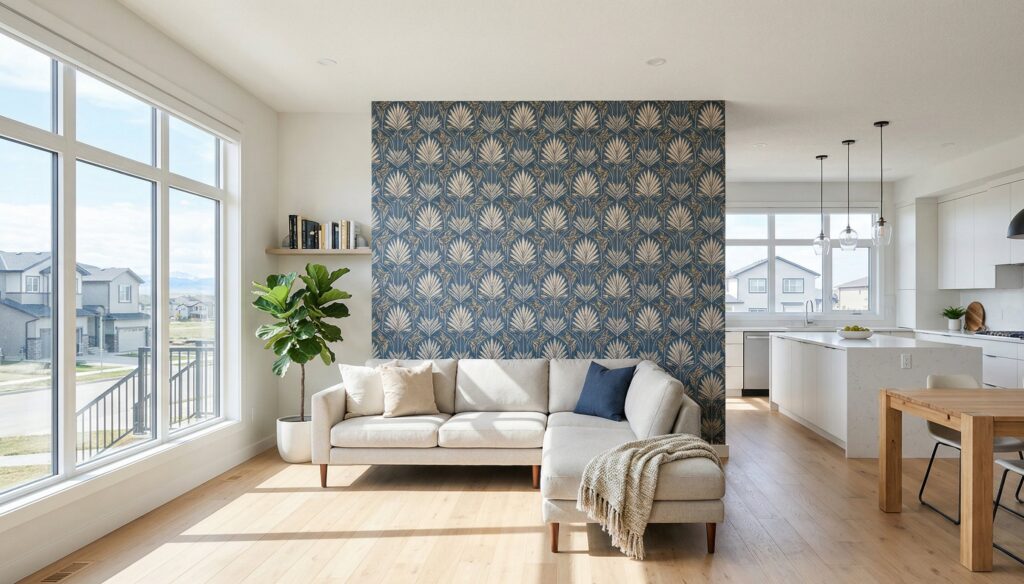
Wallpaper can be installed in a newly built house, but it should not be rushed onto fresh drywall, fresh paint, or damp interior walls. The safest timing is after the home is enclosed, heated, ventilated, painted or primed, and the wall surfaces have had enough time to cure and stabilize.
For most Calgary new builds, a practical rule is to wait at least 30 days after the final paint coat before installing standard wallpaper. Some projects can be ready sooner when the walls are properly primed instead of painted, while high-end papers, grasscloth, murals, bathrooms, basements, and homes with visible construction moisture deserve a more careful review.
Why New Build Timing Matters
A new house still carries moisture from drywall compound, primer, paint, millwork, concrete, cleaning, and seasonal weather. Even after possession, the home may still be drying out as the furnace, HRV, humidifier, and air conditioning settle into normal use.
Wallpaper adhesives need a stable surface. If the wall is still releasing moisture, if the paint has not cured, or if the drywall dust was not sealed properly, the result can be seam lifting, bubbling, poor adhesion, staining, or difficult removal later.
Good installation starts before the first strip is cut. The wall has to be dry, clean, sound, smooth, and sealed with the right primer for wallcovering.

The Best Time to Install Wallpaper in a New House
In a typical new build, wallpaper is usually ready to schedule when these conditions are met:
- Drywall work is complete. Taping, mudding, sanding, and repair touch-ups should be finished.
- Dust has been removed. Drywall dust weakens primer and adhesive bonds if it is left on the surface.
- Paint or primer has cured. Standard interior paint should usually be left for about 30 days before wallpaper installation unless the coating manufacturer gives a different cure time.
- The home is conditioned. Heat, ventilation, and humidity control should be running normally, not just temporarily during construction.
- Humidity is stable. The room should not feel damp, cold, or newly washed. Consistent indoor humidity matters more than the possession date on paper.
- Other trades are mostly finished. Cabinetry, electrical finishing, flooring, trim, and major touch-ups should be done so the wallpaper is not damaged by later work.
If the wallpaper is a delicate paper, natural grasscloth, silk, linen, metallic, handprinted material, or a large-format mural, the standard should be higher. Those products show wall problems faster than forgiving vinyl or nonwoven materials.
Should Wallpaper Go on Before or After Builder Paint?
Either can work, but the wall still needs to be prepared correctly.
If the builder has already painted the room, the paint needs time to cure. Many new homes are finished with flat builder paint, which can be porous and fragile. A professional installer may still recommend a dedicated wallcovering primer over that paint so the adhesive bonds evenly and the paper can be removed more cleanly in the future.
If wallpaper is planned before final paint, the wall should not be left as bare drywall. Bare drywall and joint compound can absorb adhesive too aggressively and can tear during future removal. The right approach is a sealed, sanded, dust-free wall with a proper primer made for wallcovering.
Do You Have to Wait a Full Year?
Usually, no. You do not need to wait a full year before installing wallpaper in every new build.
The one-year idea comes from a real concern: new homes move, dry, and settle. Minor drywall cracks and nail pops are common during the first heating and cooling cycle. That does not automatically mean wallpaper is impossible, but it does mean the wall should be inspected carefully.
Feature walls in bedrooms, dining rooms, offices, foyers, and powder rooms can often be installed well before the one-year mark if the surface is dry, smooth, stable, and properly primed. Large walls crossing many corners, high stairwells, below-grade spaces, and very expensive natural wallcoverings may be better scheduled after the first round of builder deficiency repairs.
Rooms That Need Extra Caution
Bathrooms and Powder Rooms
Powder rooms are excellent wallpaper rooms because they are small and visually important. Full bathrooms need more caution. Wait until ventilation is working, caulking is complete, showers have been used, and humidity behavior is predictable. Avoid delicate natural papers close to splash zones.
Basements and Below-Grade Walls
Basements in new homes can hold extra moisture from concrete, framing, and exterior conditions. Before installing wallpaper below grade, confirm the wall is dry, there is no condensation, and the room has normal heat and airflow. If humidity is still being controlled with construction drying equipment, wait.
Exterior Walls and Large Window Walls
Exterior walls can be cooler, especially during Calgary winter and shoulder seasons. Cold wall surfaces can slow adhesive curing and may reveal condensation issues. Large sunny window walls can also create temperature swings. These are not automatic deal breakers, but they should be checked before material is ordered.
What We Check Before Installing
Before installing wallpaper in a new build, we look at more than the calendar. The inspection usually includes:
- wall smoothness, sanding quality, and drywall repair areas;
- paint cure time and paint type;
- dust, residue, construction grime, or overspray;
- surface porosity and whether primer is needed;
- inside and outside corners that are out of plumb;
- humidity, airflow, and signs of dampness;
- trade damage risk from remaining work; and
- material type, repeat, panel layout, and seam placement.
The goal is not just to make the wallpaper stick on day one. The goal is clean seams, stable adhesion, predictable drying, and a finish that still looks right after the home has gone through seasonal changes.
Recommended Schedule for New Build Wallpaper
Use this as a practical planning guide:
- During construction: choose wallpaper, order samples, confirm quantities, and plan the wall layout.
- After drywall and paint: wait for the final coating to cure, usually about 30 days for painted walls.
- After possession: let the home run under normal heat and ventilation, especially if the interior feels humid.
- Before install: complete wall repairs, remove dust, prime as needed, and keep other trades away from the finished wall.
- For premium natural materials: schedule an installer review before ordering the final quantity.
Bottom Line
Wallpaper can usually be installed in a newly built house once the walls are dry, cured, smooth, clean, and properly primed. For standard new-build feature walls, 30 days after final paint is a sensible minimum. For grasscloth, murals, bathrooms, basements, or homes with obvious moisture, it is worth waiting longer or having the walls inspected first.
Wall Style Innovations installs wallpaper, murals, grasscloth, and wallcoverings in new homes across Calgary, Airdrie, Chestermere, Cochrane, Okotoks, Canmore, Banff, and Red Deer. We can review the wall condition, recommend the right timing, and prepare the surface before installation.
Plan a new build wallpaper install or request a free quote.